With AI, I'm able to build Maibel with a fraction of the team I'd have once needed. It also made it dangerously easy to think I could build everything alone.
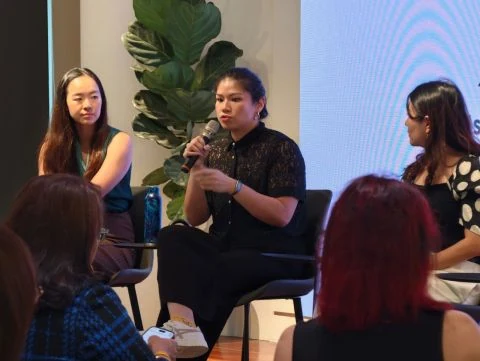
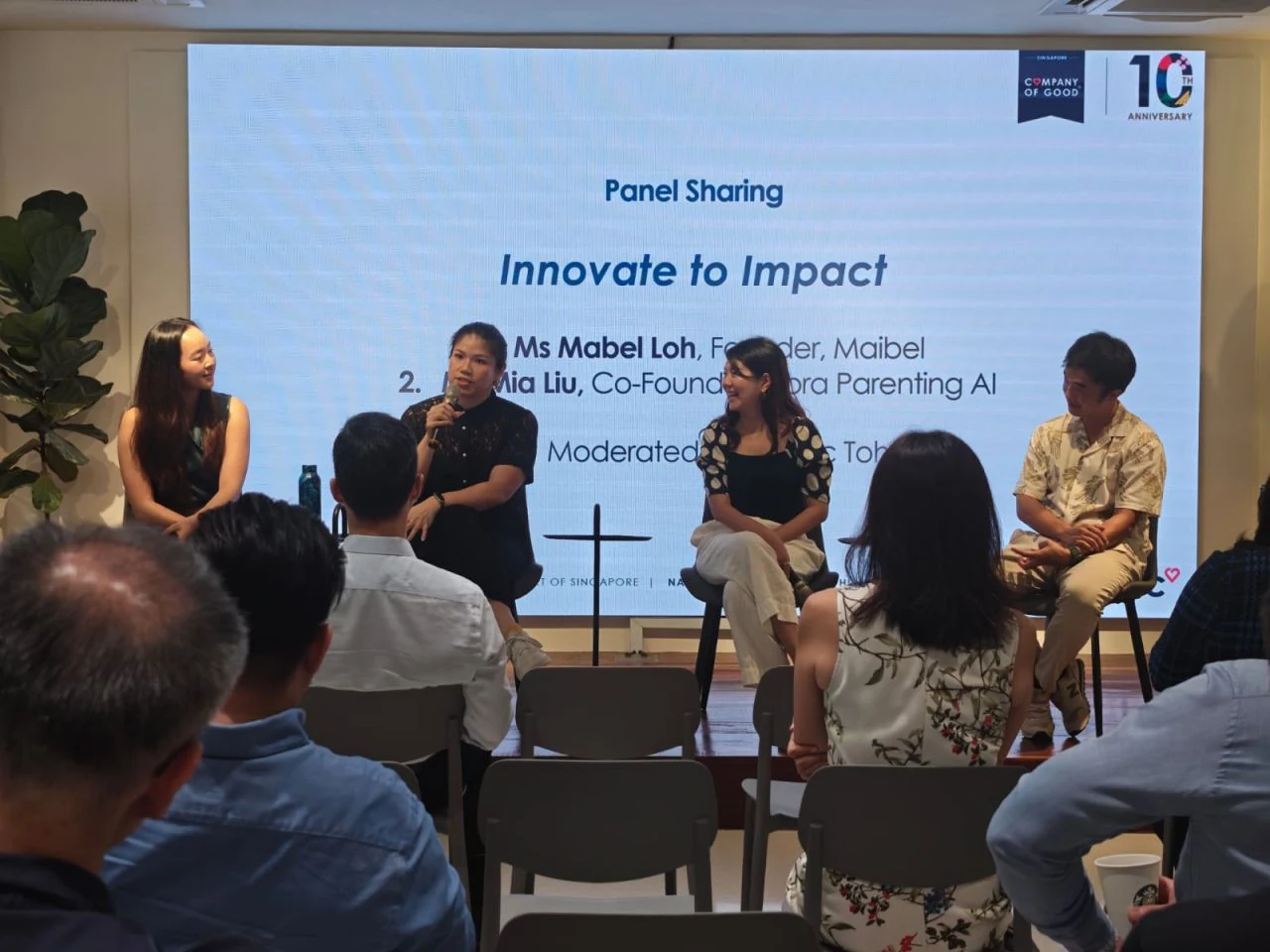
Mia Xiaohui Liu and I were invited to speak at a panel at Vidacity's Executive Access Series with National Volunteer and Philanthropy Centre (NVPC)'s Company of Good.
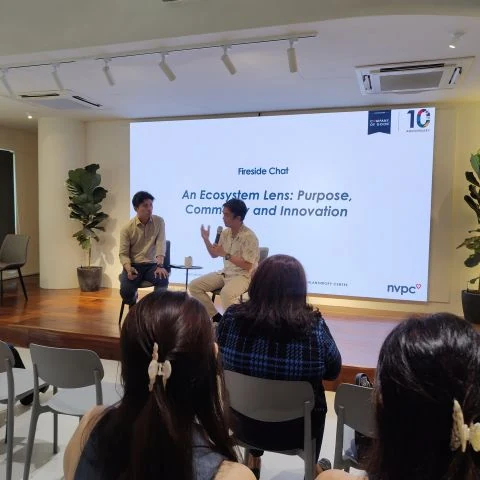
Zac Toh and Li Yong Tang moved the discussion beyond doing more with less: how can organisations combine technology, ecosystems and collaboration to create more impact without simply adding more people or capital?
As a solo founder, building lean with AI is not optional.
But efficiency is only one form of innovation.
Both Mia and I grew our startups through Lorong AI's community, which kept us close to emerging research, connected us to experts and created collaborations we couldn't have created alone.
An AI model can retrieve expertise.
It doesn't inherit the judgment formed by years of working inside an ecosystem, operating through constraints, and seeing what fails in practice.
In conversations after, Joachim Goh and Cheryl Koh redefined what "good" meant for me.
A company can make millions and still create meaningful impact.
It can also pursue one worthy mission while creating poor governance, environmental harm or damage elsewhere in the system.
That's why balance matters: across People, Society, Governance, Environment and Economic impact. And this equilibrium was something I'd overlooked.
It's easy to judge your company using the pillar where you already look best.
Maibel's mission is to build better wellness and workforce support for women.
But building relational AI while operating in isolation would be a fairly obvious contradiction.
My company can't be terrible at relationships and expect my product philosophy to compensate.
After the panel, three women approached me with collaboration ideas from completely different sectors - all serving predominantly female communities.
Yen Peng Tan shared the pressures faced by caregivers of autistic individuals. Vathsala Subramaniam raised the employee wellbeing needs of women in hospitality. Xiang Ping Tan opened a conversation about early-childhood educators.
Alongside the nursing pilot I've been exploring in Taiwan, the same workforce wellbeing gap surfaced again: women whose work revolves around caring for others while their own wellbeing becomes an afterthought.
AI gives Maibel the ability to adapt without turning every profession into a separate product.
But technology alone cannot tell us how trust works inside each community, what support people will accept, or where a technically correct intervention could still fail.
That knowledge comes from the organisations and people already inside them.
I used to think AI-native meant reducing how much the company needed from people.
Now I think it means being much more precise about where people remain irreplaceable.
I’m building relational AI.
My company has to be relational too.

Hi, I’m Mabel.
I’m the founder of Maibel. I write about emotional AI, women’s wellness and learning to build the things I wish existed.
More about me