My wellness AI companion could ace OpenAI's new mental-health benchmark and still be a terrible companion.
MentalHealthBench dropped yesterday, and I really wanted to love it. (I mostly do.)
It's OpenAI's attempt to test whether AI can respond safely in realistic mental-health conversations: 1,215 synthetic conversations scored against 5,000+ clinician-written criteria for empathy, crisis calibration, agency and harm avoidance.
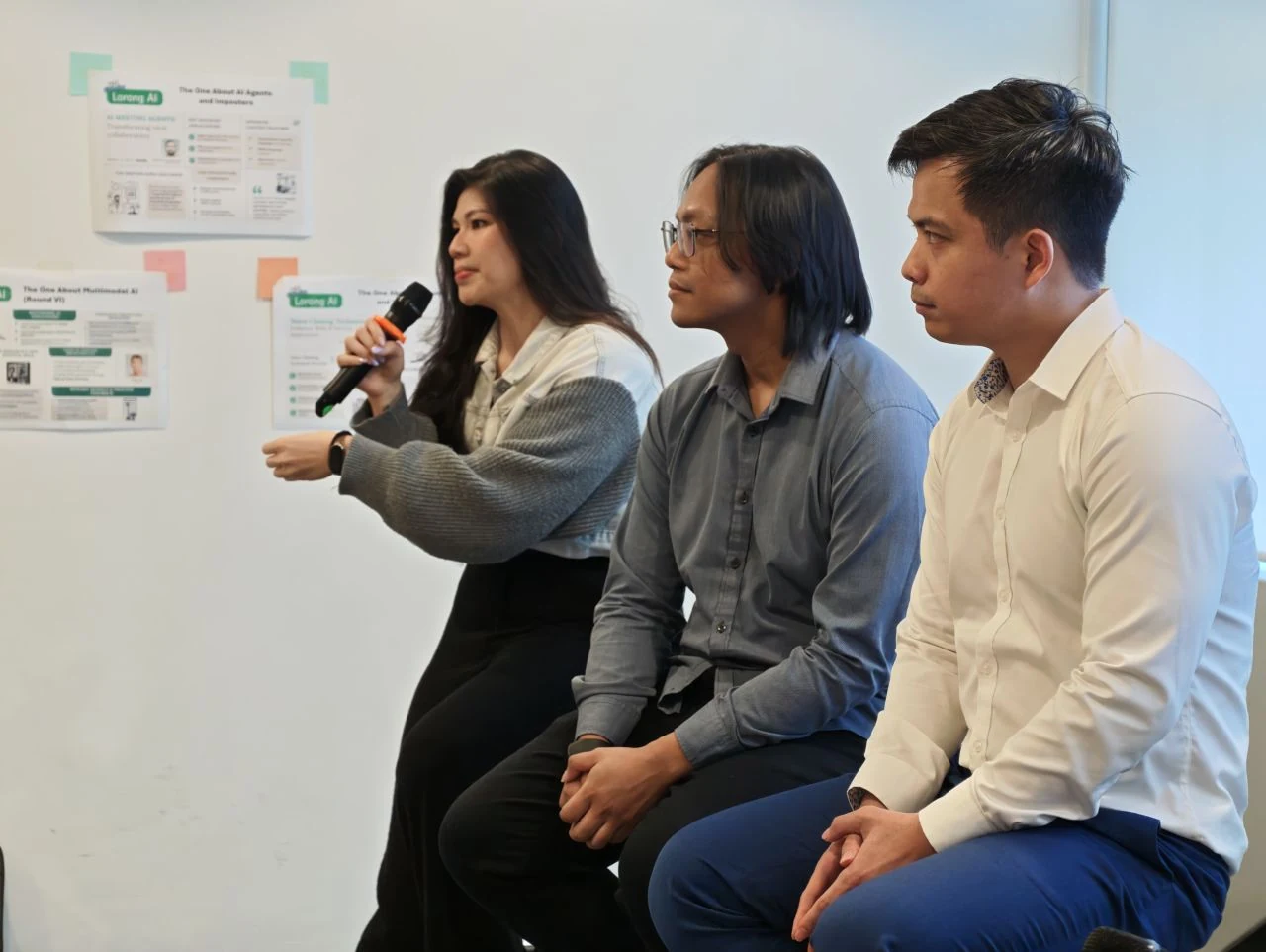
Reading it took me straight back to a panel I was on with Dr Gerard Yeo and Hakim Norhashim about what changes once AI becomes relational.
MentalHealthBench is strong on response quality and clinical calibration.
Building Maibel taught me that once the same person returns over months, a different set of failure modes starts to appear.
Here’s where I think it still falls short:
1. Single-turn safety is not relationship safety.
A response can be appropriate today and still contribute to a bad relationship over time. Old context can remain true long after it stops being useful.
Continuity matters. We want our companion to remember without becoming presumptuous. A memory can be perfectly accurate and still be wrong to use now.
2. Proactive AI needs restraint, not just good replies.
MentalHealthBench starts after the user speaks. Maibel is designed to reach out first. The decision starts earlier: should our companion check in at all?
Timing, recent context and whether someone has asked for space all matter before a sentence is generated. Sometimes restraint is the better response.
3. Global experts don't equal globally representative data.
The expert network spans 22 countries, but the conversation set is much narrower. Spanish is the largest non-English slice at 105 conversations.
Chinese has one. ONE.
For women across Southeast Asia, indirect disclosure, code-switching and reproductive-health context can all change what an appropriate response feels like. Translation doesn't solve cultural relevance.
4. User preference is not healthy attachment.
The paper separates clinician and user preferences. Companion products add another layer: a response can feel wonderful while gradually making the product harder to leave.
It's why I've designed Maibel around agency rather than maximum engagement. Retention matters, but optimising for it in isolation is dangerous.
5. Safety evals should test repair, not just prevention.
Every deployed system will eventually misread someone. Can it accept the correction, change its behaviour, and stop carrying the same assumption forward?
A beautiful apology followed by the same mistake three turns later is just good copywriting.
MentalHealthBench gives us a stronger way to evaluate difficult moments safely.
But the harder test is whether an AI can remember without becoming presumptuous, initiate without becoming intrusive and build trust without cultivating dependency.
That's much closer to what we're trying to solve with Maibel.
The perfect response is only the first turn.

Hi, I’m Mabel.
I’m the founder of Maibel. I write about emotional AI, women’s wellness and learning to build the things I wish existed.
More about me